
High frequency indicators, like vehicles sales, air traffic, steel consumption and GST E-way bills, point towards a sequential pickup in momentum of economic activity during the second half of the fiscal 2024-25 and sustain moving forward, RBI Bulletin said on Wednesday. However, a strong dollar, driven by US economic resilience and trade policy pivots, could exacerbate capital outflows from emerging economies, push risk premiums higher, and intensify external vulnerabilities, said an article on 'State of the Economy' published in RBI's February bulletin.

The Reserve Bank of India (RBI) on Monday directed banks and non-banking financial companies (NBFCs) offering gold loans to thoroughly review their policies, processes, and practices to identify any gaps. The central bank also told them to closely monitoring their gold loan portfolios amid significant growth observed in this segment vis--vis some lenders. Additionally, the RBI, through a circular, instructed these lenders to ensure adequate controls over outsourced activities and third-party service providers.

The finance minister, in her Budget speech, should focus more on what she is directly responsible for, rather than on programmes where her role is largely supportive, notes Nitin Desai.
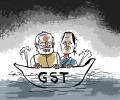
Agra has long been known for the Taj Mahal, but it is also a manufacturing hub filled with micro, small and medium enterprises (MSMEs) that make everything from electronic components to metal products, from paints and chemicals to footwear. And five years after the introduction of the Goods and Services Tax (GST), the MSMEs here complain that while the indirect tax regime has been transformative, cutting out the need to file multiple taxes, its biggest drawback has been the delay in credit refunds. Whoever you speak to - MSME owners, tax lawyers, or industry bodies like the National Chambers of Industries and Commerce (NCIC), Agra Footwear Manufacturers and Exporters Chamber (AFMEC) and Agra Shoe Manufacturers Association (ASMA) - they all emphasise that the GST continues to face some key challenges.

The government's initiative to migrate SEZ data from NSDL software to ICEGATE system for streamlined reporting of import data caused double counting of gold imports, resulting in inflated figures and the issue has now been largely rectified, government sources said. The downward revision has provided the actual picture of trade deficit (difference between imports and exports), which was earlier looking very high. The deficit for November will now be revised downwards from $37.84 billion to about $32.8 billion. Similarly, there will be a revision in overall import numbers as well.

Exemptions, and the fact that farm income is outside the tax net, ensure that India's tax-GDP ratio stays low.
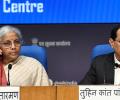
'Our attempt to honour the taxpayer has been since 2014 and more actively since 2019-2020 onwards.'
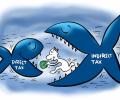
Before 2019, an estimated 22 million individual income-tax returns did not have to pay any taxes. But after the change in the exemption level, another 13 million individual tax returns did not require to pay taxes. Thus, of about 58 million returns, as much as 63 per cent or 35 million went out of the direct tax net, A K Bhattacharya points out.

Isn't there something significant in the UPI example for all of us to learn from and execute to enable world-scale success for our startups?, asks Ajit Balakrishnan.

Surplus liquidity in the banking system as measured by absorption of excess funds by the Reserve Bank of India (RBI) fell sharply at the end of the last week due to outflows on account of advance tax payments. According to the RBI data, the net liquidity absorbed by the central bank on September 16 was at Rs 3,243.57 crore, much lower than the average of Rs 56,809.92 crore in the preceding four days of the week. The average absorption of funds by the RBI so far in September is at Rs 1.13 trillion, against the average of Rs 1.2 trillion in the previous month, the data showed.

'Consider 40% to 50% in equities, 10% in gold as a hedge, and the remaining 30% to 40% split between multi-asset funds and hybrid funds.'

The National Informatics Centre uses AI to automate document analysis and detect fraud in government departments.

'It is ensured that no adversaries or people who oppose Tahawwur Rana's philosophy are housed in the same ward or jail.' 'Additionally, it is ensured that he does not have any prior contacts within that jail.' 'So, the lodgment of such a high-profile prisoner is done very carefully.'

The government has set a direct tax collection target of Rs 13.35 trillion, which includes Rs 7.66 trillion from corporation tax and Rs 5.69 trillion from personal income tax.

Concerned over inflationary pressures in the economy, the Reserve Bank of India (RBI) is bringing down surplus liquidity in the system rapidly. It has fallen to pre-Covid levels and almost 2 per cent of banks' net demand and time liabilities (NDTL). NDTL shows the difference between the sum of demand and time liabilities (deposits) of a bank (with the public or the other bank) and the deposits in the form of assets held by the other bank.

'We are not opposed to any Indian language. We are against Hindi imposition.'

The Reserve Bank of India (RBI) conducted two overnight variable rate reverse repo (VRRR) auctions on Tuesday, marking the first instance of such action in a single day. The move aimed to reduce liquidity from the banking system, which has been largely in deficit mode for the past four months. Market participants noted that the central bank held the second VRRR auction due to its awareness of funds being released to banks during the day.

The new income tax regime for filing returns has been "sweetened" in the Budget 2023-24 and it will be beneficial for maximum number of taxpayers as they can enjoy a "reduced" tax rate, CBDT chairman Nitin Gupta said. Speaking to PTI during a post-Budget interview, Gupta said the intent of the government while announcing the new slabs and rates under the new tax regime is to gradually "do away with deductions and exemptions" so that the "long-standing demand of reduction of taxes for individual taxpayers and entities can be met." Finance Minister Nirmala Sitharaman, while presenting the Budget 2023-24 in the Parliament on Wednesday, said the government has made the new income tax regime more attractive for taxpayers and has thus brought about 'substantial changes' in its structure for the benefit of the middle class.

Finance ministers of states demanded an increase in allocation under 50-year interest-free loan scheme, while fiscally stressed states like Punjab and Kerala pitched for a special package and borrowing flexibility, sources said on Friday. In a pre-budget meeting with Union Finance Minister Nirmala Sitharaman, states have also urged for higher borrowing limits to support fiscal activities, besides additional funds for Jal Jeevan Mission.
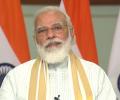
"The emphasis is on making every rule, law, policy people-centric, and public-friendly. This is the use of the new governance model and the country is getting its results," Prime Minister Modi said while speaking at the launch of a platform for 'Transparent Taxation -- Honoring the Honest'.

The proposed move to withdraw the DDT would help encourage investments by addressing multiple taxation of income and bringing down the effective tax rate on companies, which is among the highest in the world.

Finance Minister Nirmala Sitharaman on Saturday said the new tax regime will benefit the middle class as it will leave more money in their hands. Talking to reporters after the customary post-Budget address to the central board of the RBI, she said it is not necessary to induce individuals to invest through government schemes but give them an opportunity to make a personal decision regarding investments. "...the way we allowed for standard deduction and also the rates which have been fixed, tax rates which have been fixed for different slabs, it has actually left more money in the hands of the people, the taxpayer, the household," she said.

While the ratio determines the extent to which the government is able to finance its expenditure, it is also an indicator of tax compliance. Developed countries have a higher contribution of tax to their GDP.
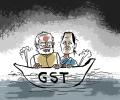
CAG recommended fixing a definite time frame for rolling out simplified GST return forms.
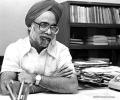
What stood out in his 15-year journey as a member of the political executive at the Centre was his glowing record as India's most successful and effective finance minister. Both as prime minister and finance minister, he understood the importance of gradualism, except when the economy or the polity was in a crisis.

The demand for extension of the GST cess regime among others was made by several state finance ministers at a pre-budget consultation called by Union Finance Minister Nirmala Sitharaman in New Delhi. Besides, many states also demanded raising the share of the Union government in the Centrally Sponsored Schemes (CSS). Currently, the central government and state government share in some CSS is 60:40 while in others it is 75:25.

The Union Road Transport and Highways Ministry on Wednesday said the states and union territories (UTs) will provide up to 25 per cent rebate on road tax for vehicles that are purchased after scrapping old vehicles under the new National Automobile Scrappage Policy. The ministry in a press note said that in the vehicle scrapping policy, it is proposed to have a system of incentives to nudge vehicle owners to discard old and polluting vehicles. "As an incentive for scrapping, concession is stipulated in the motor vehicle tax for a vehicle registered against submission of Certificate of Deposit, which is issued by a Registered Vehicle Scrapping Facility.

'It would be reasonable to assume that Modi 3.0 would be more focused on projects and schemes which do not require any legislative change or which have the support of its coalition partners,' asserts A K Bhattacharya.

The draft is in the form of a discussion paper, and has taken radical steps to improvise on the paper released in 2009 on the same issue.

All sectoral indices ended lower. BSE Telecommunication tanked 2.18 per cent, metal (1.77 per cent), auto (1.70 per cent), energy (1.64 per cent), oil & gas (1.59 per cent), commodities (1.39 per cent) and financial services (1.37 per cent) were the major laggards.

Several leading scientists, academicians, and agriculturalists have called for raising government support for research and development to make Indian agriculture future-ready.

Hindi film industry hopes to get some tax relief from the upcoming Budget 2015-16.

The US Trade Representative noted that India's average applied tariff rate stood at 17% per cent, the highest of any major world economy.

The one national GST unifies the country's $2 trillion economy and 1.3 billion people into a common market, an exercise that took 17 tumultuous years.

The government is mulling changes in the income tax laws to bring cryptocurrencies under the tax net, with some changes that could form part of the Budget next year, a top official said. Revenue secretary Tarun Bajaj said that in terms of income tax, some people are already paying capital gains tax on the income from cryptocurrency, and in respect of Goods and Services Tax (GST) also the law is "very clear" that the rate would be applicable as those in case of other services.

'There are no new benefits for senior citizens, but on the other hand senior citizens having sizeable dividend income may have to suffer tax at applicable slab rates,' says Mahesh Padmanabhan.

Around 75 per cent of total returns are expected to be e-filed in current year.

In FY24, the net income generated from Waqf properties fell to about Rs 1.26 crore from Rs 150 crore in FY20.

India opened up its economy to the private sector in 1991.
